Freelancer vs Agency vs In-House Employee: Which Should You Hire?
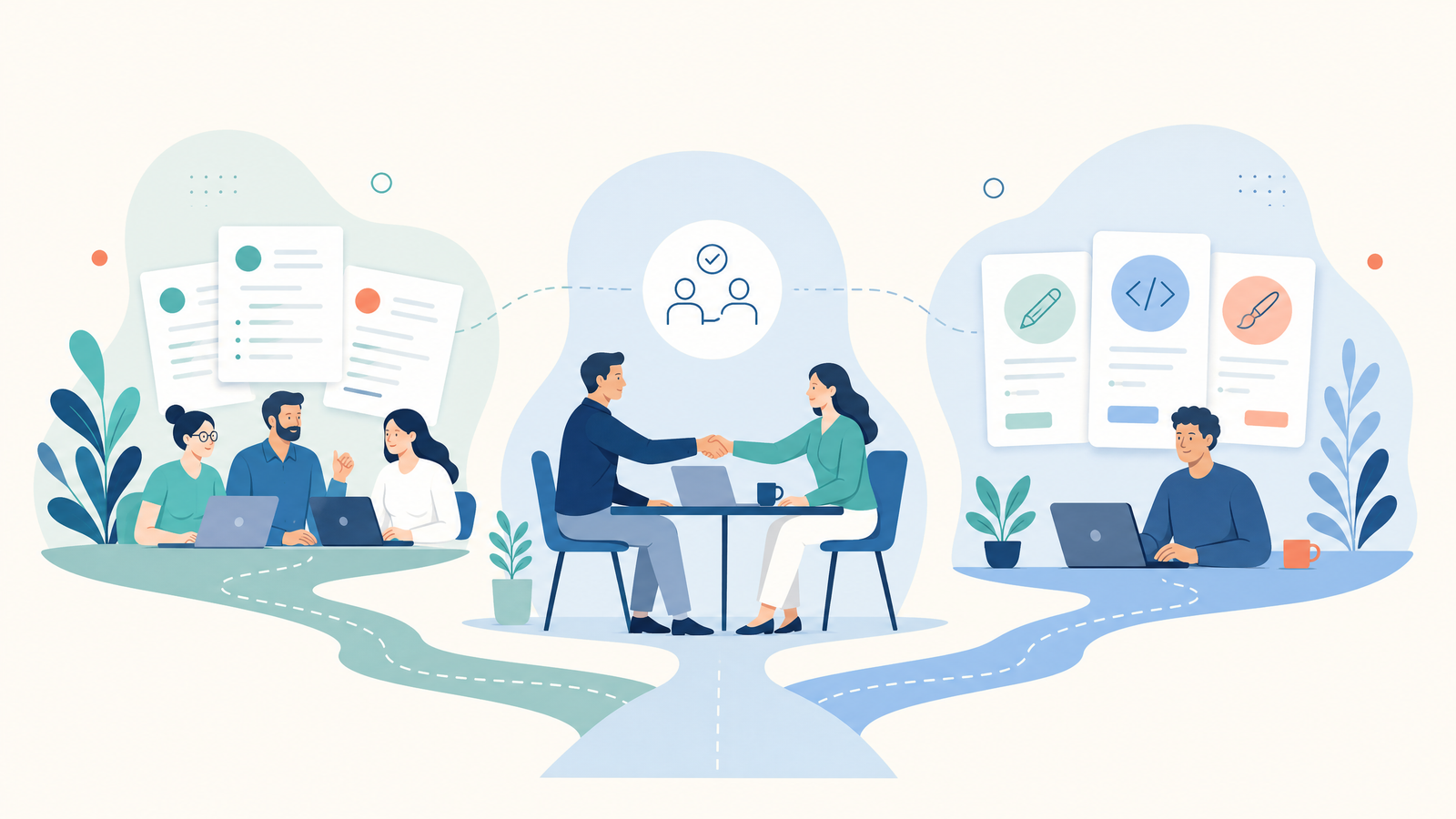
Every business eventually faces the same question: who should actually do the work? Whether you need a website built, a marketing campaign launched, or ongoing design support, you generally have three options: hire a freelancer, partner with an agency, or bring on an in-house employee.
Each option has real trade-offs in cost, speed, quality, and control. Choosing the wrong one can mean blown budgets, missed deadlines, or work that doesn't fit your needs. This guide breaks down exactly how each option works, when it makes sense, and how to decide with confidence.
1. Freelancers: Flexible, Specialized, Cost-Effective
A freelancer is an independent professional you hire directly, usually for a specific project or task rather than an ongoing role. Freelancers are common for web development, graphic design, content writing, digital marketing, virtual assistance, and more.
Advantages of Hiring a Freelancer
- Lower cost — no salary, benefits, office space, or equipment overhead
- Highly specialized skills for a specific task
- Fast to hire — often within days, not weeks
- Flexible engagement — scale up or down as needed
- Direct communication with the person doing the work
Potential Downsides
- Availability can vary if the freelancer is juggling multiple clients
- Quality depends heavily on vetting the right person
- Less built-in redundancy if the freelancer becomes unavailable
- You may need to manage the project yourself
Freelancers are the right choice when you have a clearly defined project, a limited budget, or need specialized skills without a long-term commitment.
2. Agencies: Full-Service Teams With Built-In Structure
An agency is a company that provides a team of professionals — designers, developers, strategists, project managers — working together under one roof to deliver your project.
Advantages of Hiring an Agency
- Access to a full team with diverse, complementary skills
- Established processes, project management, and accountability
- Built-in redundancy — the agency doesn't disappear if one person is unavailable
- Often better suited for large, complex, or multi-disciplinary projects
Potential Downsides
- Significantly higher cost than freelancers
- Less direct access to the people actually doing the work
- Slower turnaround due to internal processes and layers of approval
- Less flexibility for small or fast-moving projects
Agencies make sense for large-scale, multi-faceted projects — like a full brand relaunch or an enterprise software build — where you need coordinated expertise across several disciplines.
3. In-House Employees: Long-Term Commitment and Full Control
Hiring an in-house employee means bringing someone onto your payroll full-time (or part-time) as a permanent member of your team.
Advantages of Hiring In-House
- Full control over priorities, schedule, and daily work
- Deep familiarity with your business, culture, and long-term goals
- Immediate availability for ongoing or urgent needs
- Stronger long-term investment in your company's success
Potential Downsides
- Highest total cost — salary, benefits, taxes, equipment, office space
- Slower to hire — recruitment can take weeks or months
- Less flexible if your workload fluctuates
- Risk of paying for idle time between projects
In-house hiring is best when you have consistent, ongoing work in a specific area and want someone deeply embedded in your business long-term.
Side-by-Side Comparison
| Factor | Freelancer | Agency | In-House Employee |
|---|---|---|---|
| Cost | Low to moderate | High | Highest (salary + benefits) |
| Speed to Start | Fast (days) | Moderate | Slow (weeks/months) |
| Flexibility | High | Moderate | Low |
| Best For | Defined, specialized projects | Large, multi-discipline projects | Ongoing, core business needs |
| Control & Access | Direct communication | Managed through account team | Full, daily control |
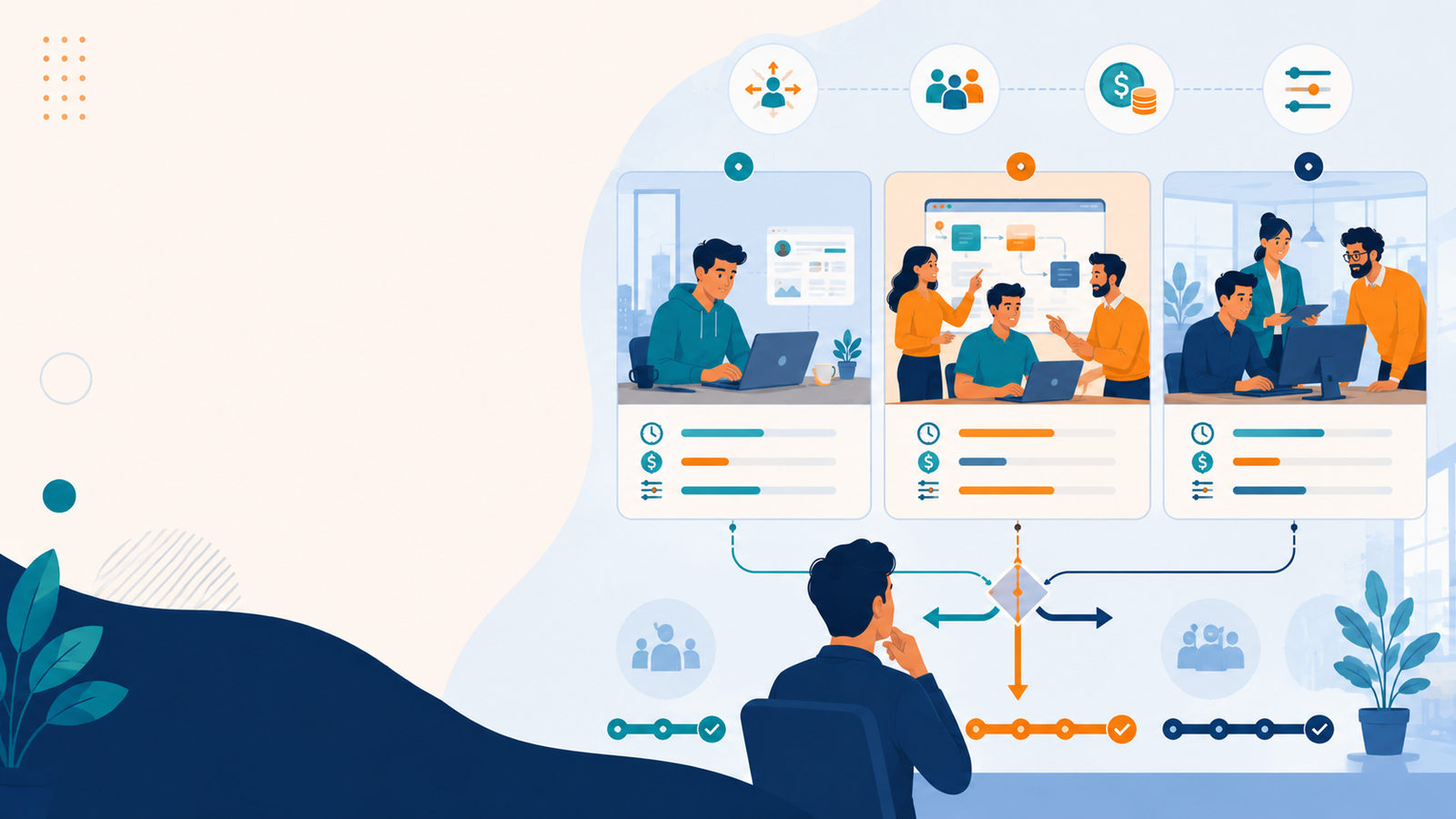
How to Decide: 4 Questions to Ask Yourself
1. Is this a one-time project or ongoing work?
One-time or short-term → freelancer or agency. Ongoing, core work → in-house employee.
2. What's your budget?
Tight budget → freelancer. Larger budget for a full team → agency. Budget for a salaried role → in-house.
3. How complex is the project?
Single skill needed → freelancer. Multiple skills, coordinated → agency.
4. How much control do you need day-to-day?
Need daily oversight and involvement → in-house. Comfortable managing outcomes, not hours → freelancer or agency.
There's No Single Right Answer — Only the Right Fit
Many businesses actually use a mix of all three — an in-house team for core operations, agencies for large campaigns, and freelancers to fill specialized gaps or handle overflow work. The key is matching the hiring model to the specific project, not defaulting to whatever you've used before.
If your next project is well-defined and doesn't require a full-time hire, working with a freelancer is often the fastest and most cost-effective way to get quality work done.
With HireAakash, you can browse verified freelancers across web development, design, digital marketing, writing, mobile development, business consulting, virtual assistance, and more — all in one trusted marketplace.
Ready to find the right fit for your next project? Explore HireAakash and connect with skilled freelancers today.